
Why suspension condition matters
Ride and grip linked
Good suspension helps the tyres stay planted instead of skipping across the road.
Steering symptoms considered
We check how worn suspension may be affecting steering feel and stability too.
Post-repair behaviour checked
The job is judged by how the car handles afterwards, not by the parts list alone.
When the car feels loose or unsettled
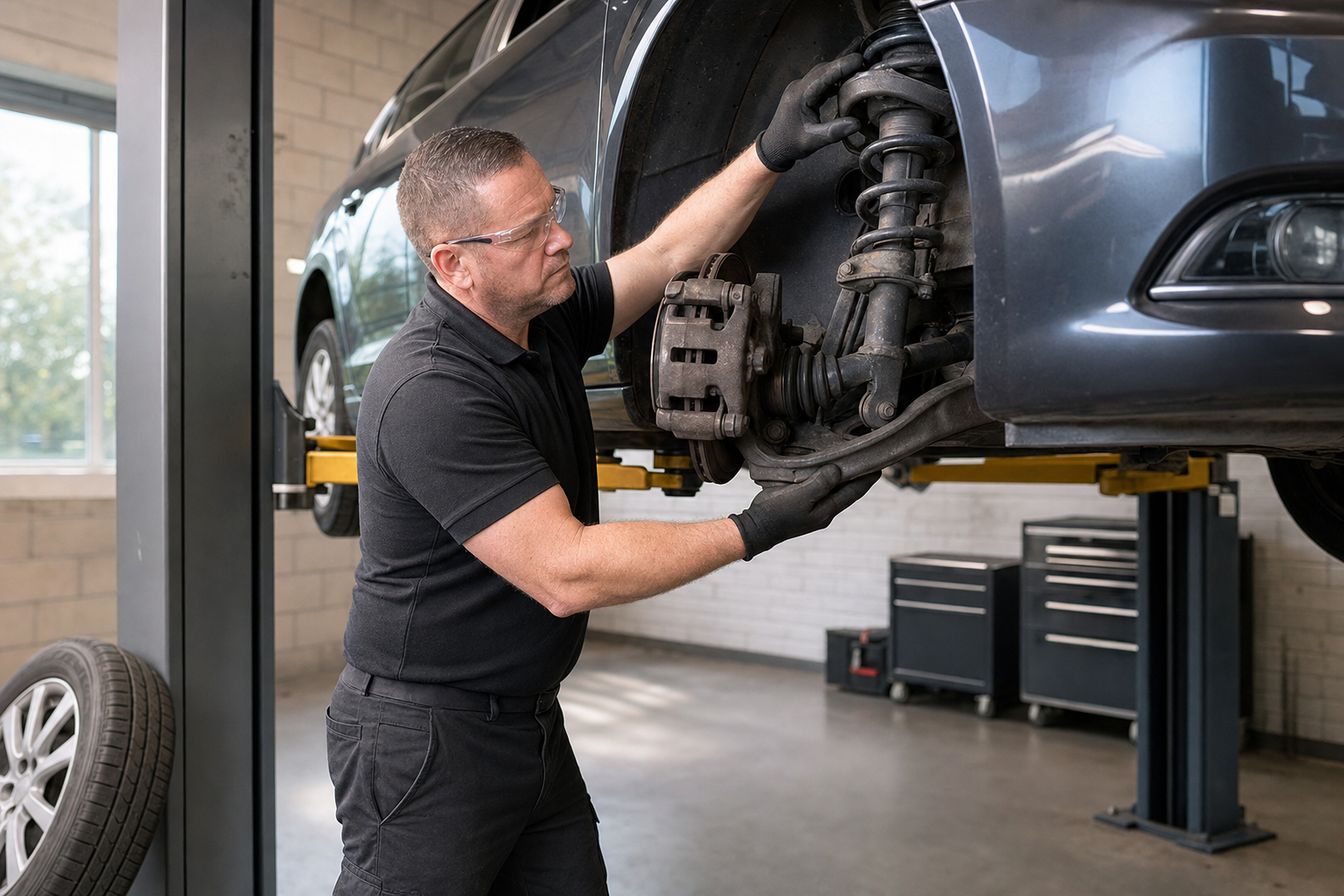
When the ride turns bouncy, the tyres wear oddly or the car starts knocking over every rough patch, suspension wear is often in the background. We inspect springs, dampers, bushes, joints, arms and mountings to find what is worn, damaged or loose.
That matters because suspension does more than smooth bumps out. It helps the tyres stay in contact with the road and supports stable braking and predictable handling. With Motor Action 360 Ltd, we trace the cause of the movement, not just the noise it makes.

Repairs that consider the whole system
Suspension faults and steering symptoms often overlap, so we look at how the car behaves as a whole. A worn component can affect straight line stability, cornering feel and even how quickly tyres scrub down.
After replacing parts, we check how the repair has changed the vehicle's behaviour and whether alignment needs attention.
Choosing Motor Action 360 Ltd means the work is looked at in context, which is far more useful than swapping a part and hoping the rest sorts itself out.
Frequently asked questions
What are the signs of worn suspension parts?
Common signs include knocking noises, uneven tyre wear, excessive bouncing, poor ride quality, instability and a vehicle sitting unevenly. Those symptoms tell us the suspension needs inspecting, but they do not all point to the same failed part.
Can suspension faults affect tyre wear and braking?
Yes. Worn suspension can reduce how well the tyres stay in contact with the road, which can influence tyre wear, braking stability and how predictable the car feels in corners or on rough surfaces.
Do suspension repairs always need alignment checks?
Not always, but alignment is often worth considering after component replacement because worn or renewed parts can change how the car tracks. We look at the repair in context and explain when that next check makes practical sense.