

What helps you make sense of the job
Damage positioned first
Where the leak or corrosion sits shapes the best repair route for the system.
Adjoining sections considered
We check nearby parts so the repair plan reflects the system's wider condition.
MOT links explained
We connect exhaust faults with the test issues they can trigger or worsen.
When the exhaust starts telling on itself
A louder exhaust note is not always a sporty upgrade. Sometimes it is the car telling you gases are escaping where they should not.
We investigate rattles, fumes, reduced performance and emissions warning lights by checking for leaks, corrosion, damaged mountings and faults in the exhaust system or emissions-control parts.
With Motor Action 360 Ltd, we look at the position and severity of the damage so you get a repair plan that suits the actual condition of the system.
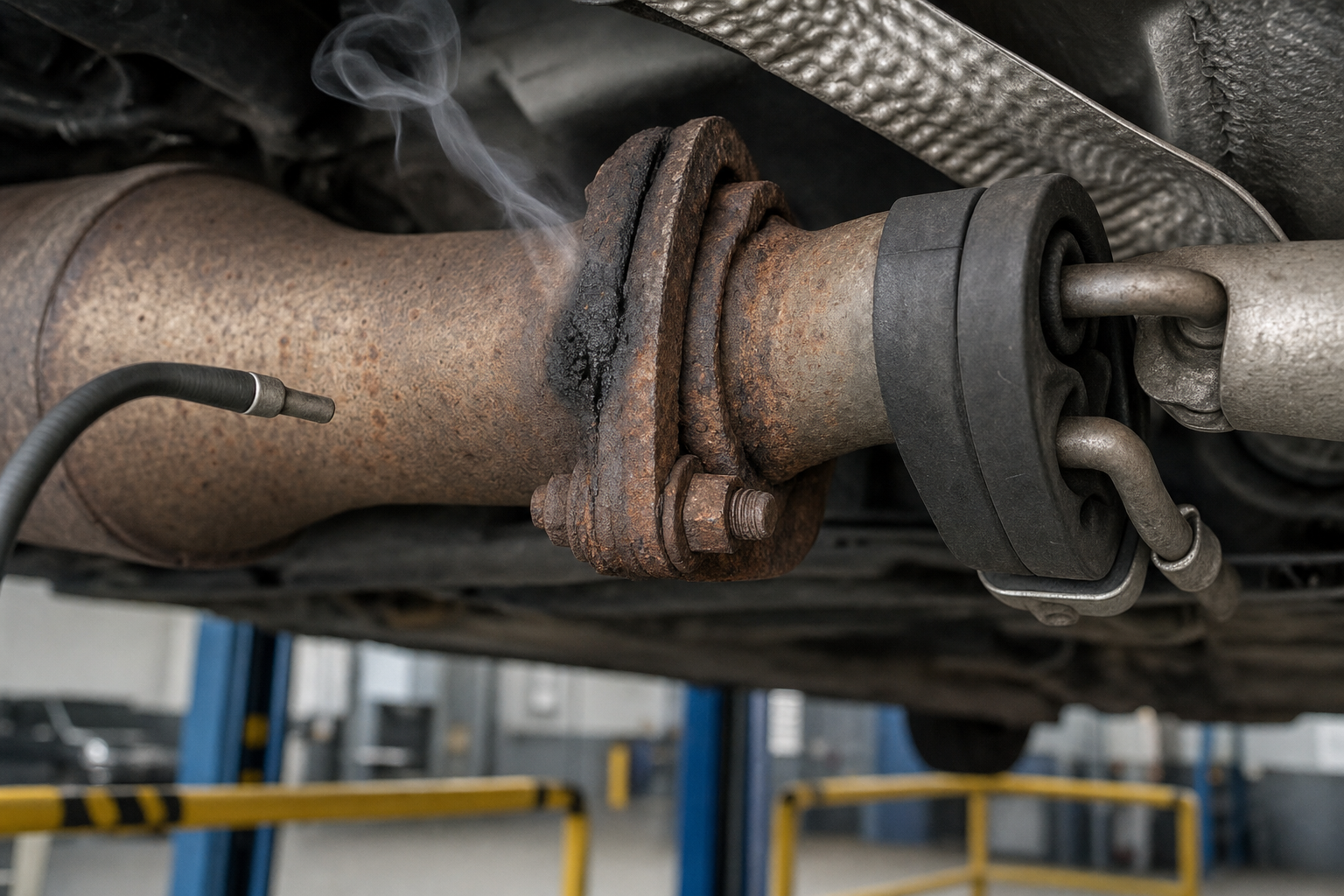
Repair scope that matches the damage
Exhaust repairs are rarely about one isolated section in total isolation. If adjoining parts are badly corroded or strained, that changes what makes sense to repair and what is likely to last. We explain that clearly before work starts.
From our Farnham garage, we can also connect exhaust faults with MOT concerns, because leaks, emissions trouble and insecure mountings often show up in the test. Choosing Motor Action 360 Ltd keeps the link between diagnosis, repair and MOT follow-up nice and clear.
Frequently asked questions
Can a noisy exhaust cause an MOT problem?
Yes. Exhaust leaks, insecure mountings and emissions-related faults can all affect MOT outcomes. If the exhaust has become louder or there are fumes and rattles, it is worth checking it before the test or before a retest is due.
Do you always replace the whole exhaust system?
No. The repair scope depends on where the damage is, how severe it is and what condition the adjoining sections are in. Sometimes a section repair makes sense. Other times wider deterioration changes what is likely to last.
Can exhaust faults trigger warning lights?
They can. Some exhaust or emissions-control problems affect sensors and system readings, which may lead to dashboard warnings. That is why we check both the visible condition and the fault symptoms together rather than treating them as separate issues.